
US-75 trunk relocation Bartlesville
ODOT MOT — permit calendar before rig.
Bartlesville, OK · Washington County
Bartlesville Caney River and US-75 crossings — long-span HDD when open cut fails ODOT and Washington County ROW review on limestone frontage.
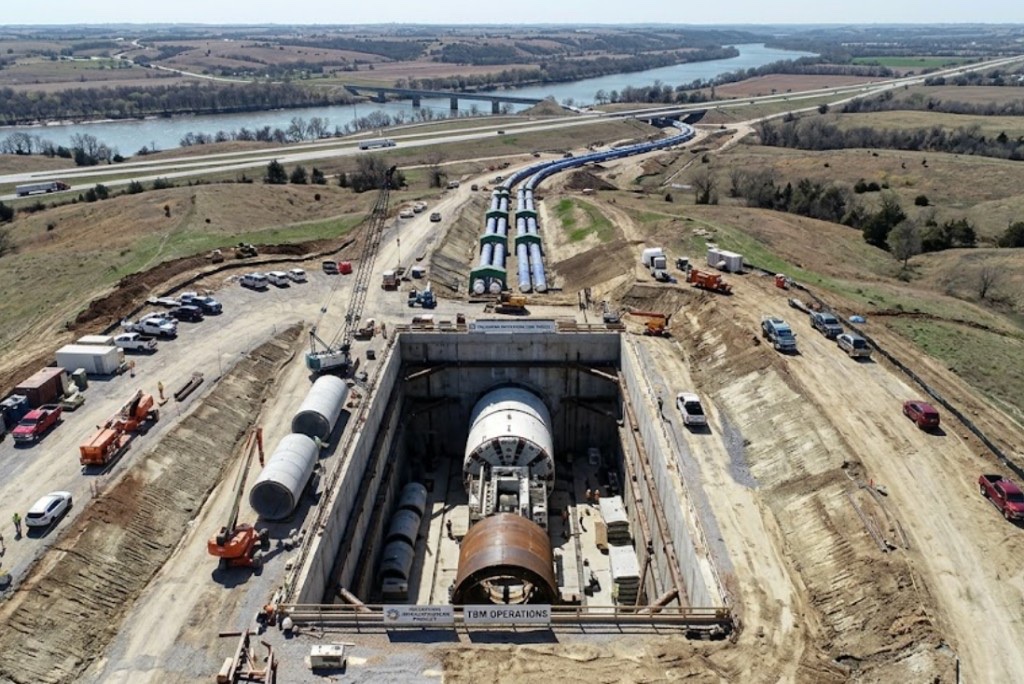
US-75 through Bartlesville defaults trenchless for trunk relocations — ODOT MOT and permit lead often exceed bore duration on shale approaches.
Directional boring at river crossing scale means larger spreads and flood-window planning months ahead on northeast Oklahoma pulls.
Caney River outfalls add floodplain awareness — wet bank trench versus HDD scoped per alignment and season.
Rail spurs near south industrial carry owner agreements — same trenchless logic when restoration would retrench plant access roads.
Real Washington County angles — not generic statewide copy.
ODOT MOT — permit calendar before rig.
HDD versus wet bank trench after spring storms.
Flagging per owner agreement on energy-adjacent roads.
City MOT on commercial corridor with rock pit contingency.
ODOT or city permit leads beyond 811. Larger rigs, as-builts, and MOT windows on US-75. River crossings checked against floodplain notes on plan.
Washington County limestone, shale, and sandstone with sandy Caney River bottoms — harder northeast profiles than red-clay OKC with river lowland groundwater on select shots.
Bartlesville bores encounter Washington County limestone, shale, and sandstone with sandy Caney River bottoms on low approaches — penetration changes quickly on south industrial pads and river-adjacent shots. Groundwater near the Caney raises buoyancy risk on long HDPE pulls. West toward the county line, tighter shale can slow penetration without correct bit selection.
Northeast Oklahoma humidity with Caney River seasonal rise — spring storms soften Washington County ROW; summer heat on long US-75 pulls toward Kansas line.
Spring storms on the Caney are Bartlesville's biggest calendar variables — saturated lowlands delay entry work briefly. Summer heat affects long US-75 pulls. Lightning holds stop rigs during severe weather. We plan bore windows around known wet seasons rather than forcing pits into unstable river banks.
City of Bartlesville Engineering, Washington County ROW, ODOT on US-75 and US-60, Caney River floodplain rules on select routes.
City of Bartlesville permits street and drive work inside limits. Washington County ROW on rural US-75 and US-60 approaches. ODOT controls state highway bores. Caney River floodplain work may need environmental review — scoped per alignment, not assumed on every quote.
Caney River and US-75 rock-heavy crossings rarely justify open cut — MOT and restoration math favors HDD.
Length, diameter, groundwater, environmental windows, flagging, engineering, inspection.
You share plans or describe the problem; we confirm alignment, depth, access, and which trenchless method fits Oklahoma soils.
Oklahoma One-Call ticket filed; two business days minimum before pits open unless your permit path differs. We pothole where marks conflict.
Bore plan, ODOT or city ROW permits, railroad agreements, and crossing engineering when the path leaves private property.
Compact spread for tight Edmond lots; larger HDD for I-35 or I-40 relocations — matched to length and diameter.
Steered pilot on design line, ream passes sized for your pipe or casing, fluid program tuned for clay or sand lenses.
HDPE fusion, steel casing, or multi-duct bundle pulled with tension and bend-radius monitoring.
Pressure test, mandrel, or survey records for owners, inspectors, and operators as spec requires.
Compact pits, replace sod or hardscape per scope, leave 811 ticket and locate map in your project file.
Weeks to months before drill — scoped in engineered quote.
Engineered dividers per ODOT or owner spec.
Alignment and season drive method — storm runoff shifts risk.
Owner or railroad agreements set path and flagging.
Engineered — length, rock, groundwater, MOT, and permit drivers listed in quote.
24/7 — Emergency dispatch statewide. Tell us entry, exit, pipe size, and county — a bore specialist calls back with cost drivers, not a flat rate.
Scope your bore path
Step 1 of 2 — path, pipe, and city first